The arenas
Ten places to duel, and some of them have no floor.
Which arena you get depends on where the duel started. The High Peaks send you to the Spires and the Pinnacles; the mines send you to the Tunnels and the Labyrinth.
Every picture here is a first-person frame from inside a duel, with the game's own health bars and spell buttons left in.
-
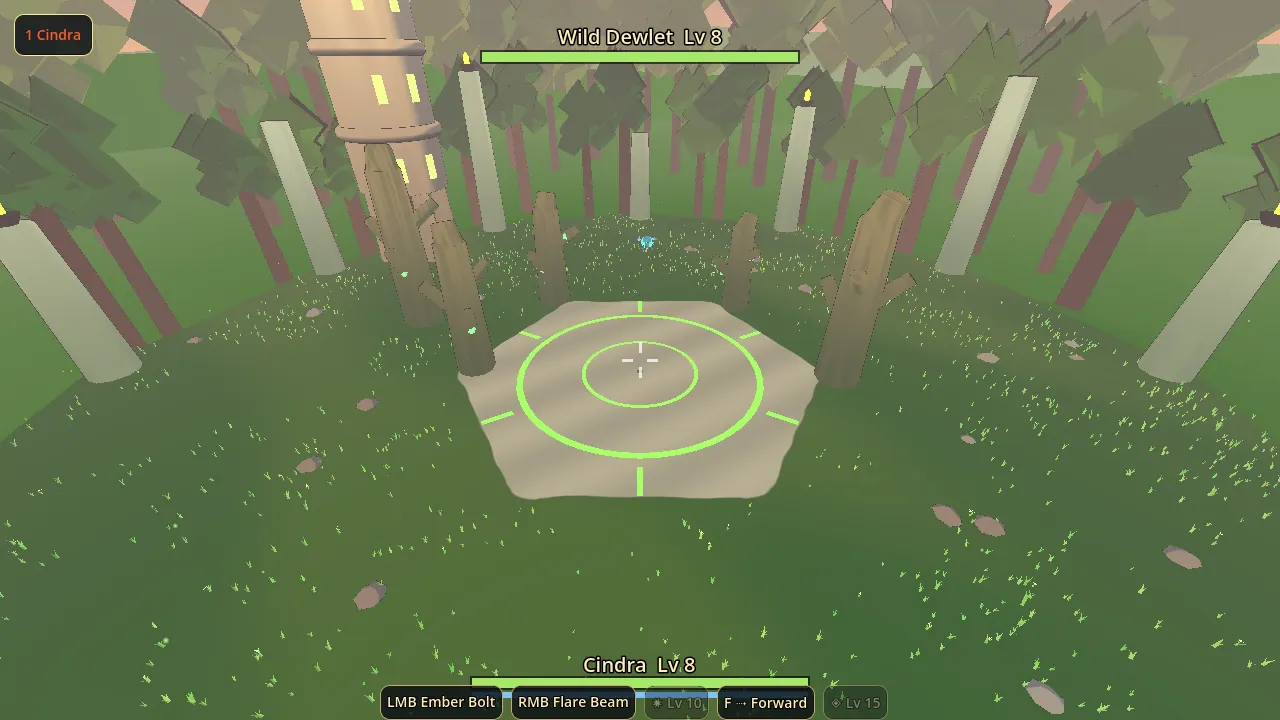
The Glade
Open grass, a ring of standing stones, and a stone dais in the middle. Nowhere to hide and nothing to fall off.
-
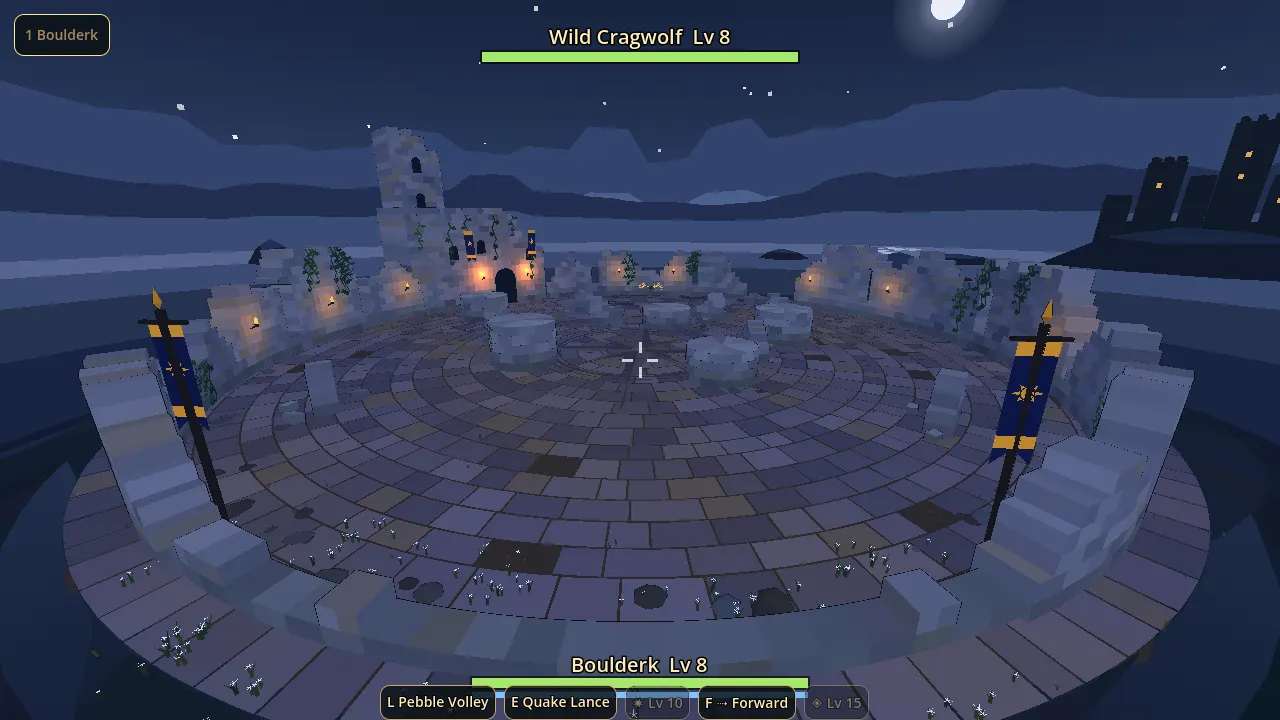
The Ruins
A broken ring of walls on dark water, lit by torches and a moon. Fought at night.
-
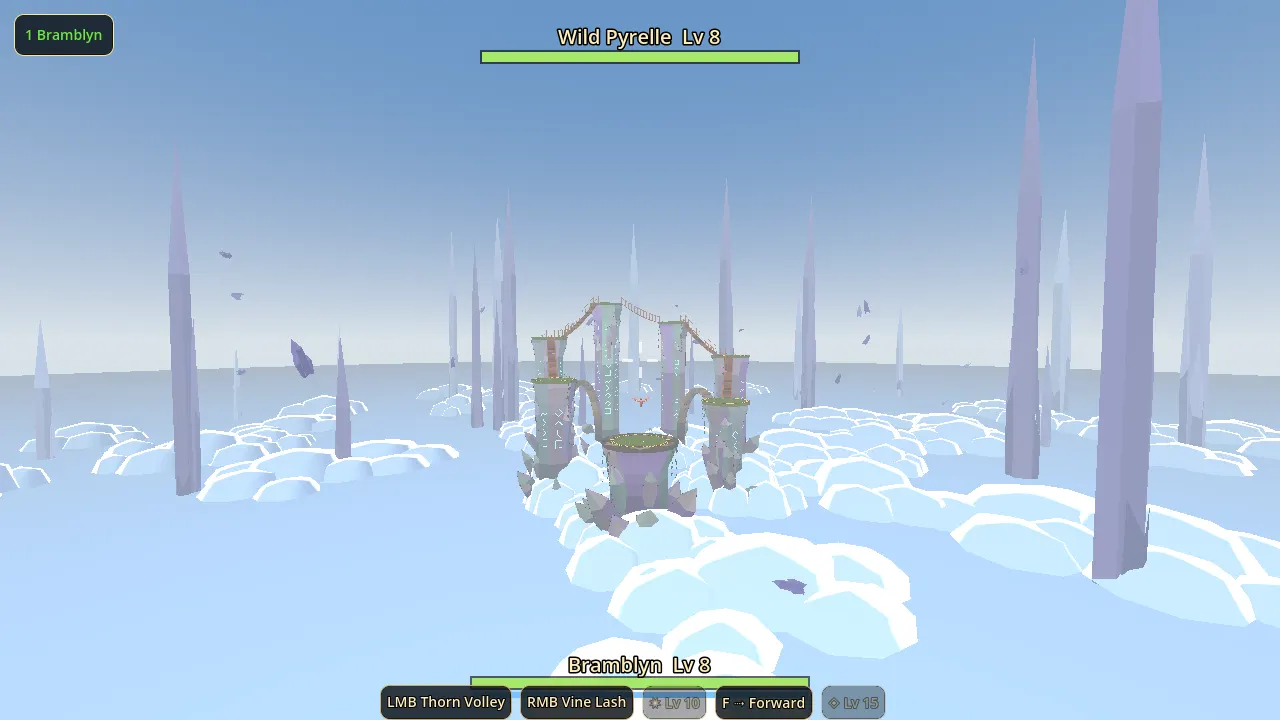
The Spires
Pale needles standing out of the cloud. There is no floor: you fight from the tops, and falling is a way to lose.
-
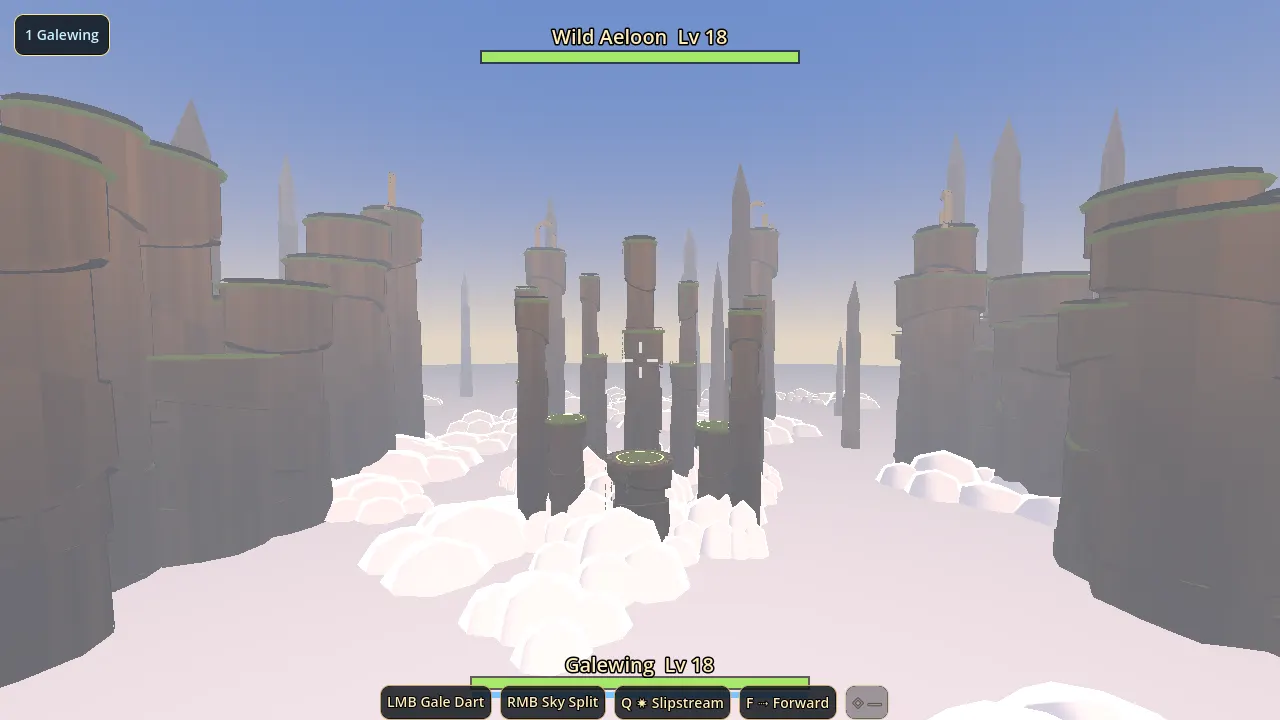
The Pinnacles
Flat-cut columns of rock high over a cloud sea. The same rule as the Spires: the tops are the only ground.
-
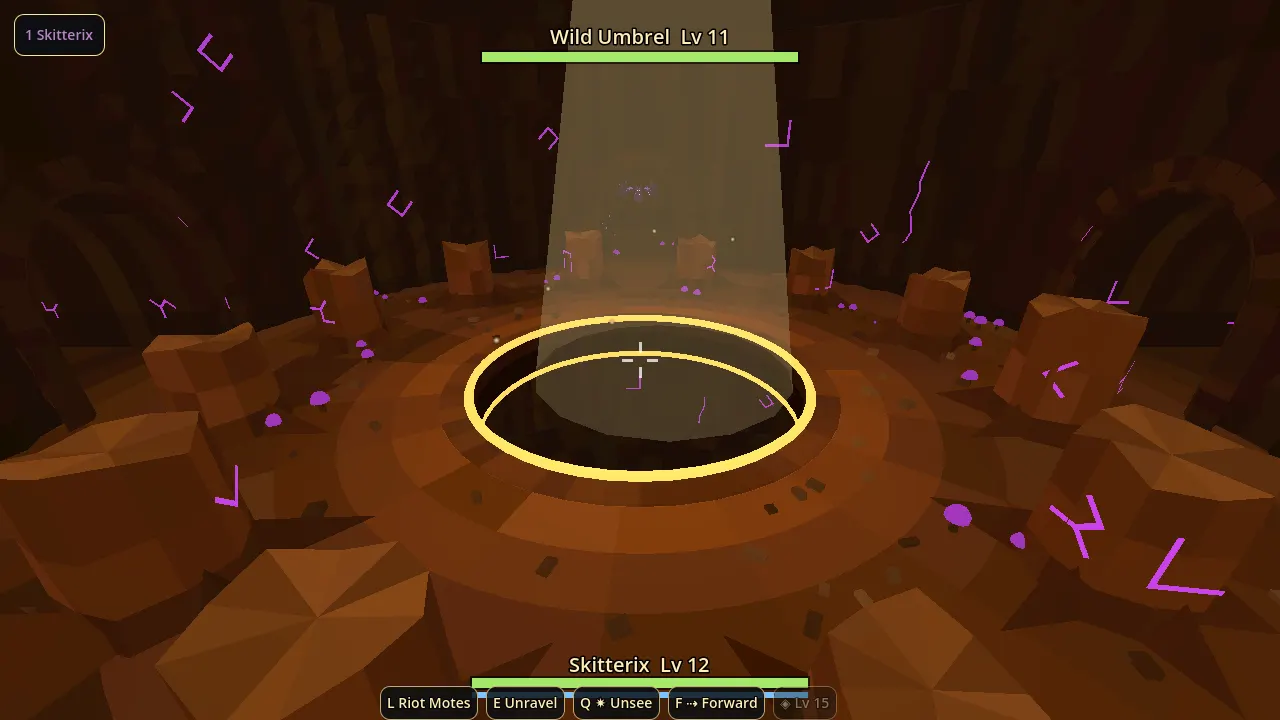
The Tunnels
A bore of warm rock under a roof, with one shaft of light coming down into it.
-
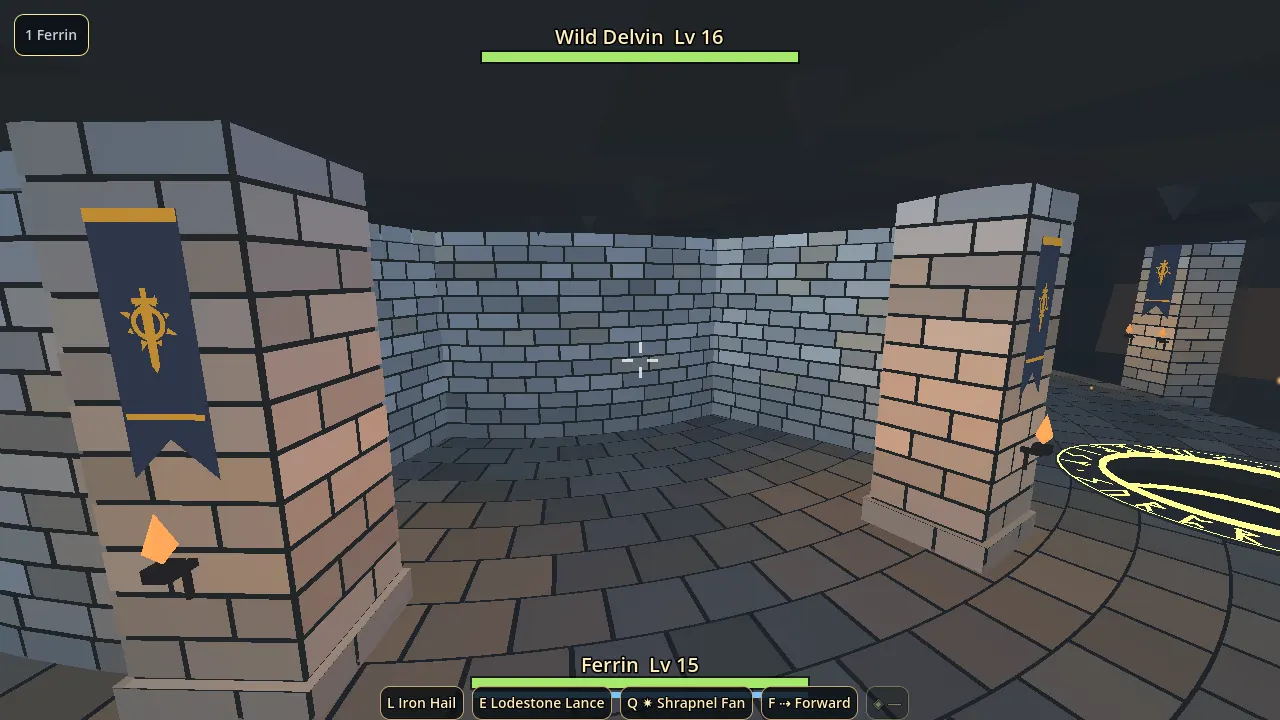
The Labyrinth
Brick walls, banners and torchlight. Every corner is cover, for both of you.
-
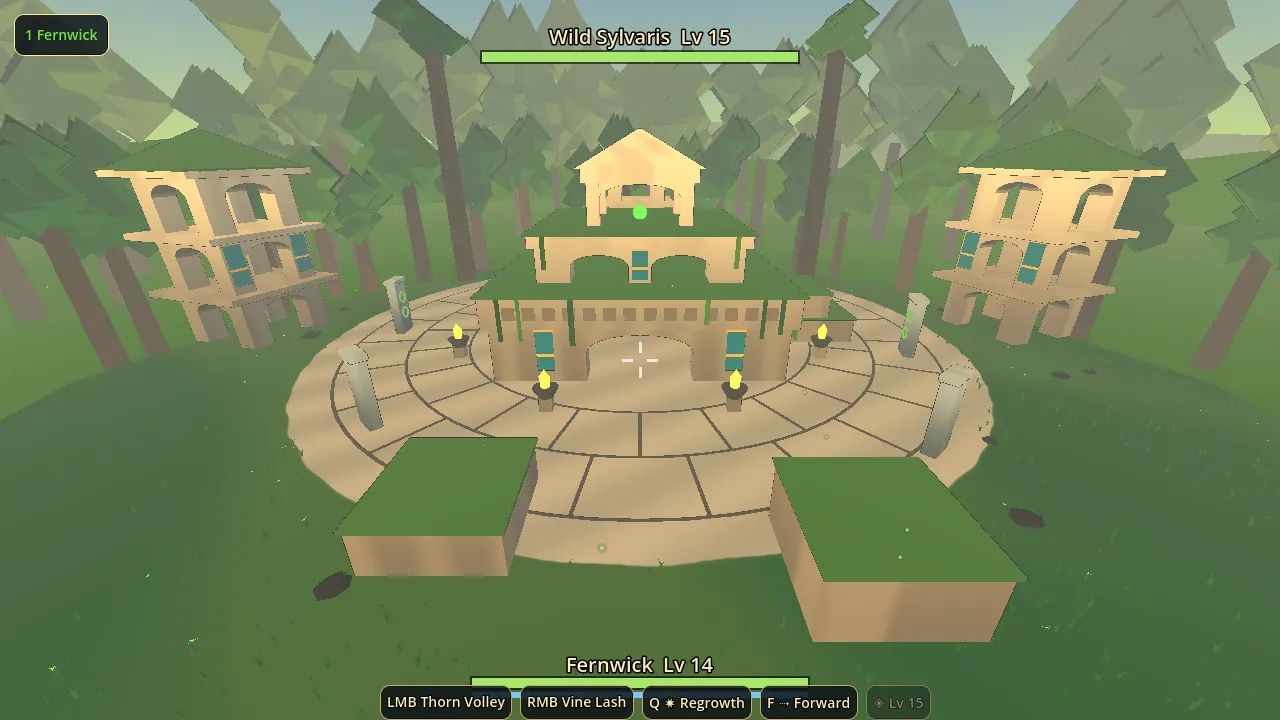
The Temple
A sandstone temple and its round plaza, with palms, side buildings and a tower.
-
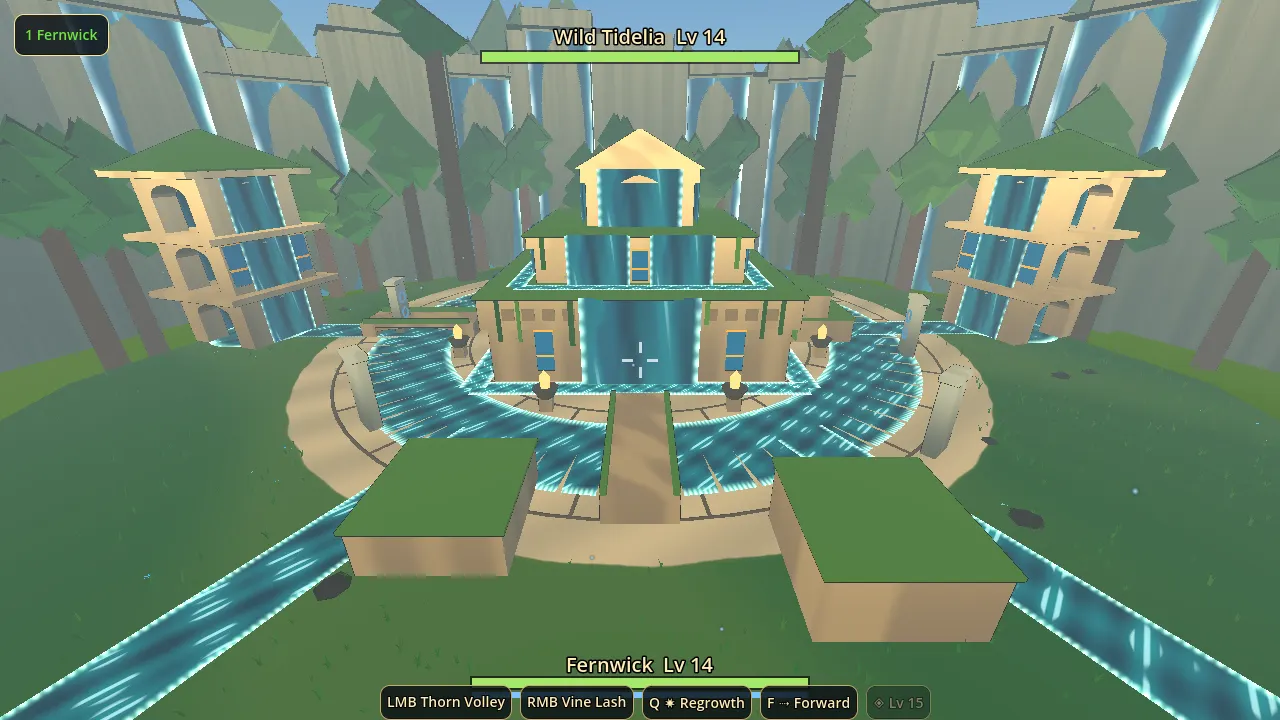
The Temple of Falls
The Great Cascade’s own arena: terraces ringed by channels of running water, with the falls behind.
Also in the rotation: the Stacks and the Colosseum. Their pictures aren't ready.
How a duel works
Real time, first person, no menus.
-
You are the elemental
The overworld is third-person. The moment a duel starts you are behind your elemental’s eyes, flying, and nothing is turn-based.
-
Two slots, two kinds of spell
One slot throws something you have to lead. The other hits whatever you are looking at. What goes in each is up to you.
-
Twelve elements, and the match-up matters
Fire burns through nature, air and ice, and water puts it out. Every element has its own list, and a bad match-up is a fight you chose.
-
A duel is how you catch things
Weaken a wild elemental below a third of its health, then fly into it to net it.